The Relationship between Post-Cesarean Section Pain Intensity and Breast Milk Production in Postpartum Mothers
DOI:
https://doi.org/10.38040/js.v18i01.1485Abstract
Introduction: Post-cesarean pain is a common post-operative condition that may interfere with early breastfeeding initiation and continuation. Pain can inhibit oxytocin release, disrupt the let-down reflex, and ultimately reduce breast milk production. In addition, maternal discomfort may limit early mobilization and mother–infant interaction, further affecting lactation success. This study is aimed to examine the relationship between post-cesarean section pain intensity and breast milk production.
Methods: A quantitative analytic correlational study with a cross-sectional design. From a population of 54, a sample of 36 respondents was selected using purposive sampling based on the Slovin formula. Pain intensity was measured using the Numeric Rating Scale (NRS), while breast milk production was assessed using a closed-ended questionnaire. Data were analyzed using Binary Logistic Regression.
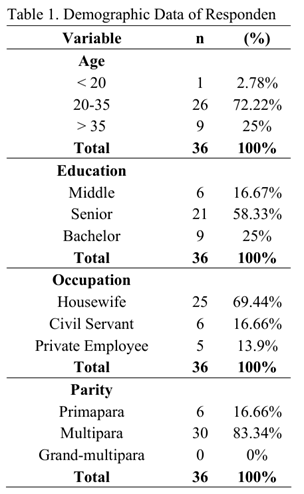
Results: Most respondents were aged 20–35 years, had secondary education, were housewives, and were multiparous. The majority experienced moderate pain and had adequate breast milk production. Binary logistic regression analysis demonstrated a significant association between post-cesarean pain intensity and breast milk production (OR = 0.266; 95% CI: 0.072–0.981; p = 0.047), indicating that higher pain intensity was associated with reduced likelihood of adequate breast milk production.
Conclusion: Post-cesarean pain intensity was significantly associated with breast milk production, with higher pain intensity linked to lower odds of adequate milk production. These findings highlight the importance of effective pain management and supportive midwifery care, including early mobilization, breastfeeding assistance, and continuous postpartum monitoring to optimize lactation outcomes.
Keywords: Breast Milk Production, Breastfeeding, Pain Intensity, Post-Cesarean Section, Postpartum Mothers
Downloads
Published
How to Cite
Issue
Section
Citation Check
License
Copyright (c) 2026 Faizatul Ummah, Ariyanti, Amirul Amaliah, Betty

This work is licensed under a Creative Commons Attribution 4.0 International License.
- The journal allows the author to hold the copyright of the article without restrictions.
- The journal allows the author(s) to retain publishing rights without restrictions.
- The legal formal aspect of journal publication accessibility refers to Creative Commons Attribution (CC BY).