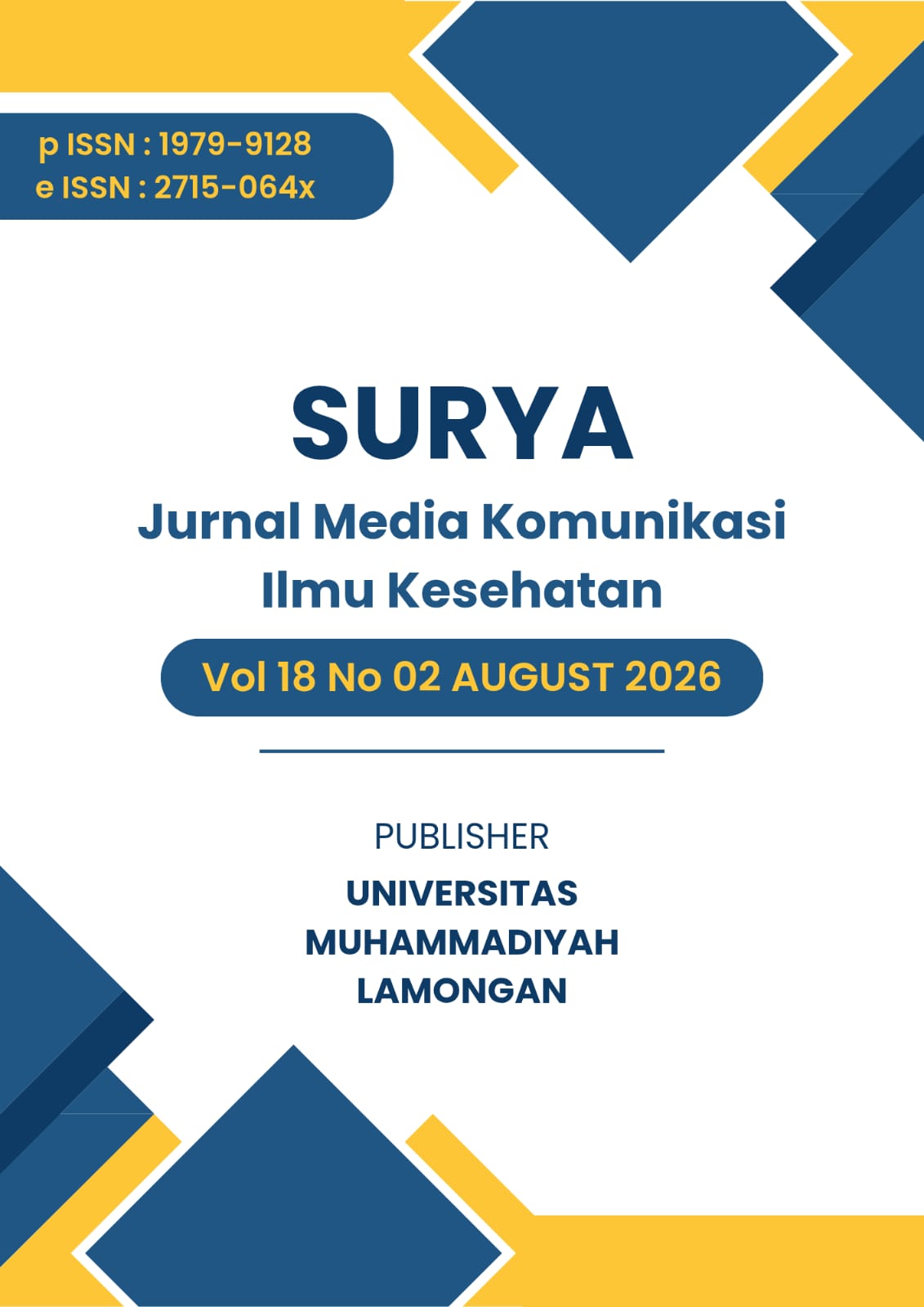
The Relationship Between Health Risk Assessment (HRA) Scores and Potential Morbidity Rates Among Students in Islamic Boarding Schools
DOI:
https://doi.org/10.38040/js.v18i02.1513Abstract
Introduction: Islamic boarding schools represent a unique closed-community environment where high occupancy density, communal behavioral practices, and limited health infrastructure create conditions highly conducive to infectious disease transmission. Health Risk Assessment (HRA) serves as a predictive instrument to identify multidimensional health risk factors before clinical manifestations occur, yet its relationship with potential morbidity rates among santri remains insufficiently explored. This study aimed to analyze the relationship between HRA scores and potential morbidity rates among students in Islamic boarding schools.
Methods: Research design used an analytical quantitative approach with a cross-sectional design. The sample consisted of 48 students at Islamic boarding schools selected through a purposive sampling technique with inclusion criteria. Data were collected using a HRA questionnaire, disease incidence form and environmental observation, than analyzed using Spearman's rank correlation test.
Results: Most respondents were aged 12-15 years (75%), had a junior high school education level (75%), and had resided at the boarding school for more than one year (83%). The Spearman correlation test revealed a strong and significant positive relationship between HRA scores and potential morbidity rates among santri (r = 0.641; p = 0.001), with overcrowding and the habit of sharing personal items identified as the dominant risk factors.
Conclusion: This study concluded that Health Risk Assessment (HRA) has a strong and significant relationship with the potential health status of students in Islamic boarding schools (r = 0.641; p = 0.001). A comprehensive and integrated health promotion strategy encompassing environmental, behavioral, nutritional, and institutional dimensions is highly recommended to improve the health status of students in Islamic boarding school.
Downloads
Published
How to Cite
Issue
Section
Citation Check
License
Copyright (c) 2026 Pratiwi Yuliansari, Ratna Feti Wulandari, Widhi Sumirat, Fresty Africia

This work is licensed under a Creative Commons Attribution 4.0 International License.
- The journal allows the author to hold the copyright of the article without restrictions.
- The journal allows the author(s) to retain publishing rights without restrictions.
- The legal formal aspect of journal publication accessibility refers to Creative Commons Attribution (CC BY).